Corporate Governance Code
N/A
Current No of listed companies
N/A
Exchange
N/A
Listing Rules
N/A
Principal legislation
N/A
Public offers / disclosure regulations
N/A
Regulatory body or bodies
N/A
Takeover / merger regulations
N/A
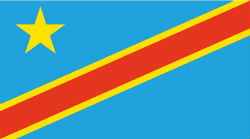
83.3m
Joseph Kabila
Kinshasa (11.6m people)
Mbuji-Mayi (2.0m people), Lubumbashi (2.0m people), Kananga (1.0m people)
Mining, mineral processing, consumer products, metal products, processed foods and beverages, timber, cement, commercial ship repair.
Congolese franc
French (Official language), Lingala, Kikongo, Swahili, Tshiluba
Christianity (Majority religion) and Islam
N/A
N/A
N/A
N/A
N/A
N/A
N/A
N/A
The relevant legislation applicable in DRC are:
The provisions of the texts cover the following points:
161
No
Yes
21
No
Yes
No
As a state member of OHADA, The Democratic Republic of Congo is subject to the OHADA Arbitration Law dated 11 March 1999 which governs the arbitration law of all members of OHADA. It is intended to apply to any internal or international arbitration, whether ad hoc or institutional.
The Uniform Act on Arbitration (Uniform Act) does not limit arbitration to commercial and professional matters - individuals and corporate bodies alike may refer their dispute to arbitration.
There are two kinds of magistrates in DRC:
The courts of the DRC recognise and enforce a foreign judgment if it (1) is not contrary to the public order; (2) it is final and dispositive of the claim under the law of the country in which judgment was rendered; (3) the copy of the original judgment meets all legal conditions for authenticity; and (4) the jurisdiction of the court rendering the judgment is not premised solely on the nationality of the defendant.
Law No 13/020 of 26 June 2013 authorises the accession of DRC to the Convention on the Recognition and Enforcement of Foreign Arbitral Awards signed in New York on 10 June 1958. This Convention obliges the courts to enforce foreign arbitral awards without reviewing them.
Regulated by Law No. 004/2002 on investment code
The investment Code attracts foreign investments into the country. The National Agency for Investment Promotion (ANAPI) is responsible for facilitating investment. In DRC, there is a one-stop shop to simplify business creation. There is no limits on foreign control for investment in DRC.
Order No 1250/CAB/MIN/SP/010/AQ/2007 of 19 July 2007 amended and completed by Order No 1250/CAB/MIN/SP/020/JT/2007 of 28 December 2007 on applicable measures to the use and consumption of tobacco, tobacco products and its derivatives.
Law No 96-002 of 22 June 1996 on the exercise of the freedom of the press.
Law No 013/2002 of 16 October 2002 on telecommunications in DRC.
The Central Bank is responsible for regulating exchange control.
The payroll tax is calculated according to a progressive tax scale. The overall tax shall not exceed 30% of the taxable income. Employers of expatriate employyes are subject to a tax of 25% on the expatriates's remuneraion. Social contributions are 3.5% for the employee's share and 9% for the employer’s share.
The standard rate of interest is 20%.
N/A
The standard rate is 16%. The rate is 0% on exports and assimilated transactions.
There is a minimum tax which applies to loss making companies: 2.5 million Congolese francs (Large companies), 750,000 Congolese francs for medium-sized companies and 30,000 Congolese francs for small-sized companies.
The standard rate of royalties is 20%. The net amount of royalties is calculated by deducting 30% from the royalties invoiced.
The standard rate of dividends is 20%.
The tax rates vary according to the nature of the goods and locality ranks.
The personal income tax is calculated according to an annual progressive tax. It cannot exceed 30% of the taxable salary. Indemnities and allowances paid to an employee relating to the termination of its empoyment contract are taxed to a Personal Income Tax at the rate of 10%. Foreign – sourced profits are not taxable.
The Corporate Income Tax rate is 35% (30% for mining companies).
John Ffooks & Co
Address: Madagascar - Head Office
Immeuble Assist - 1st Floor Ivandry
Antananarivo 101
Madagascar
Tel: +261 20 224 3247
Email our preferred firm

Find out how Addleshaw Goddard can support you to navigate through the legal challenges when doing business in the African markets.